# Afraid of Using Pesticides for Balcony Vegetables? This "Dish Soap Water" Trick Works Better Than Pesticides, and It’s Safe for Kids to Eat!
Have you ever been in this situation? You work hard to grow some leafy greens, chives, and lettuce on your balcony. Watching their leaves unfurl day by day fills you with joy—until one day you lift a leaf and gasp! Aphids, whiteflies, and fungus gnats have all gathered for a "party"! The leaves are chewed full of holes like a sieve, and your heart breaks into pieces. You want to use pesticides, but you’re scared of residues; if you don’t, the bugs are better at "cleaning their plates" than you are. Honestly, anyone who’s ever grown vegetables knows this struggle. But don’t rush to throw away your trowel! You really don’t need to buy fancy biological pesticides, nor do you have to sneak out with a flashlight at night to catch bugs (though I’ve definitely done that…). The method I’m going to talk about today is right in your kitchen—yes, it’s the ordinary dish soap you use to wash dishes every day! I know what many of you might think when you hear "spraying dish soap on vegetables": "Isn’t that a chemical product?" But here’s the thing—if you use the right amount and choose the right type, it actually becomes the gentlest and most effective "physical insecticide" for home-grown vegetables. The key is just two words: **dilution**. So how exactly do you do it? Grab an empty spray bottle (you can even drill holes in an old beverage bottle if you don’t have one), fill it with 500ml of clean water, and add 3 to 4 drops of regular dish soap. Important note: choose a simple one with no added fragrances or bleaches—skip the heavy-duty degreasing types or those fancy lemon-scented ones. Stir it well, then spray directly on areas where bugs are concentrated, especially the undersides of leaves, young shoots, and curled leaf edges. These are the bugs’ "VIP lounges."
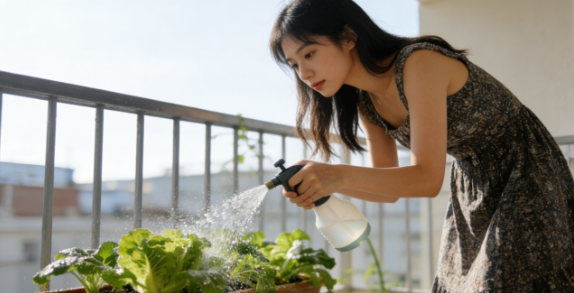 The principle is pretty straightforward: the **surfactants** in dish soap break down the waxy layer on the bugs’ bodies, causing them to dehydrate and suffocate. Soft-bodied pests like aphids and whiteflies can’t handle this at all—they’ll wilt within a few hours, and by the next day, most will be gone. What’s more, this soapy water degrades quickly: just water the plants to rinse it off within two days, and when you pick the vegetables, a quick blanch before cooking will leave you with zero worries. When my kid eats raw lettuce leaves from the balcony, I feel totally at ease.
Of course, this trick isn’t a "magic cure-all." For tougher pests like cabbage worms or snails, dish soap water will struggle to work. That’s when you need to pair it with physical methods—**hand-picking the bugs**, spreading wood ash around the plants, hanging yellow sticky traps, or even raising ladybugs as "natural helpers." But when it comes to the most common pests like aphids, spider mites, and whiteflies? Dish soap water is more than enough.
Let me share a little tip while I’m at it: the vegetables most likely to attract bugs on the balcony are usually leafy greens—like Shanghai greens, romaine lettuce, spinach, amaranth (also called "teng teng cai" in some places), and baby bok choy (known as "piao er bai" locally). Their leaves are tender and juicy, making them bugs’ favorite snacks. On the other hand, pungent vegetables like chives, garlic, and leeks have a natural "pest-repellent effect." But even chives can get aphids if the balcony has poor ventilation and too much moisture! So the first step to pest control is managing the environment: don’t overwater, give the plants plenty of sunlight, and leave enough space between them. Do this, and you’ll cut the number of bugs in half right away.
An old farmer once said something down-to-earth: "If the vegetables grow strong, bugs won’t dare to come near." That’s so true. Healthy plants have stronger pest resistance—just like how people with good immunity rarely catch colds. So make sure to fertilize them regularly (**organic fertilizer is preferred**), loosen the soil when needed, and don’t just fixate on chasing bugs.
One last reminder: don’t expect a single spray to solve the problem forever. Bug eggs might still be hiding, and they’ll hatch again when the weather warms up. So check the plants every 2 to 3 days, and repeat the treatment twice—this will basically keep the pest problem under control. Compared to pesticides, which are a "one-and-done" chemical solution, this gentle method is much more sustainable. After all, the point of growing our own vegetables is to have peace of mind and fun—not to run a chemistry experiment, right?
So next time you see tiny black spots or little green bugs on your plants, don’t panic. Grab that bottle of dish soap, mix it with some water, and give the leaves a light spray. It’s easy, cheap, and safe to eat. Isn’t the joy of growing balcony vegetables just in these little bits of wisdom?
(Tip: It’s best to avoid spraying during the strong midday sun—choose late afternoon instead to prevent leaf burn. Also, before using it on all your plants, do a test spray on 1 or 2 leaves first. If there’s no wilting after 24 hours, then you can use it on the whole batch.)
The principle is pretty straightforward: the **surfactants** in dish soap break down the waxy layer on the bugs’ bodies, causing them to dehydrate and suffocate. Soft-bodied pests like aphids and whiteflies can’t handle this at all—they’ll wilt within a few hours, and by the next day, most will be gone. What’s more, this soapy water degrades quickly: just water the plants to rinse it off within two days, and when you pick the vegetables, a quick blanch before cooking will leave you with zero worries. When my kid eats raw lettuce leaves from the balcony, I feel totally at ease.
Of course, this trick isn’t a "magic cure-all." For tougher pests like cabbage worms or snails, dish soap water will struggle to work. That’s when you need to pair it with physical methods—**hand-picking the bugs**, spreading wood ash around the plants, hanging yellow sticky traps, or even raising ladybugs as "natural helpers." But when it comes to the most common pests like aphids, spider mites, and whiteflies? Dish soap water is more than enough.
Let me share a little tip while I’m at it: the vegetables most likely to attract bugs on the balcony are usually leafy greens—like Shanghai greens, romaine lettuce, spinach, amaranth (also called "teng teng cai" in some places), and baby bok choy (known as "piao er bai" locally). Their leaves are tender and juicy, making them bugs’ favorite snacks. On the other hand, pungent vegetables like chives, garlic, and leeks have a natural "pest-repellent effect." But even chives can get aphids if the balcony has poor ventilation and too much moisture! So the first step to pest control is managing the environment: don’t overwater, give the plants plenty of sunlight, and leave enough space between them. Do this, and you’ll cut the number of bugs in half right away.
An old farmer once said something down-to-earth: "If the vegetables grow strong, bugs won’t dare to come near." That’s so true. Healthy plants have stronger pest resistance—just like how people with good immunity rarely catch colds. So make sure to fertilize them regularly (**organic fertilizer is preferred**), loosen the soil when needed, and don’t just fixate on chasing bugs.
One last reminder: don’t expect a single spray to solve the problem forever. Bug eggs might still be hiding, and they’ll hatch again when the weather warms up. So check the plants every 2 to 3 days, and repeat the treatment twice—this will basically keep the pest problem under control. Compared to pesticides, which are a "one-and-done" chemical solution, this gentle method is much more sustainable. After all, the point of growing our own vegetables is to have peace of mind and fun—not to run a chemistry experiment, right?
So next time you see tiny black spots or little green bugs on your plants, don’t panic. Grab that bottle of dish soap, mix it with some water, and give the leaves a light spray. It’s easy, cheap, and safe to eat. Isn’t the joy of growing balcony vegetables just in these little bits of wisdom?
(Tip: It’s best to avoid spraying during the strong midday sun—choose late afternoon instead to prevent leaf burn. Also, before using it on all your plants, do a test spray on 1 or 2 leaves first. If there’s no wilting after 24 hours, then you can use it on the whole batch.)
欢迎关注微信公众号:泛米米的小菜园
12本阳台种菜电子书限时免费送
关注【泛米米的小菜园】,发送“电子书”免费获取
随时随地在手机上学习交流阳台种菜
这篇文章出自 fanmimi 如需转载请注明出处;
这篇文章的地址:https://www.fanmimi.com/2025/604.html
本站部分资源收集于网络,纯个人收藏,无商业用途,如有侵权请及时告知!
 阳台种菜怎么自制营养土?
 What to Plant in March for USDA Zones 3–7: The Ultimate Spring Gardening Guide
 阳台种菜:就种这几种插土能活、长得又快的蔬菜,四季都可种植的懒人蔬菜
 阳台蔬菜种植不仅仅是为了健康饮食!
 7月份四川成都和重庆地区适合种什么菜?
 苦瓜长得弯曲变形怎么办?
 适合秋冬季节在阳台种植的6种耐寒蔬菜
 阳台种菜肥料怎么选择?家庭种菜怎么自制有机肥